Not all types of shampoo bars work well in hard water. This is due to a combination of the ingredients they use and their PH level. If you live in a hard-water area, the best shampoo bars to use are those that contain cleansing ingredients such as surfactants.
Here are some of my favourite shampoo bars that I’ve used that work perfectly in hard water:
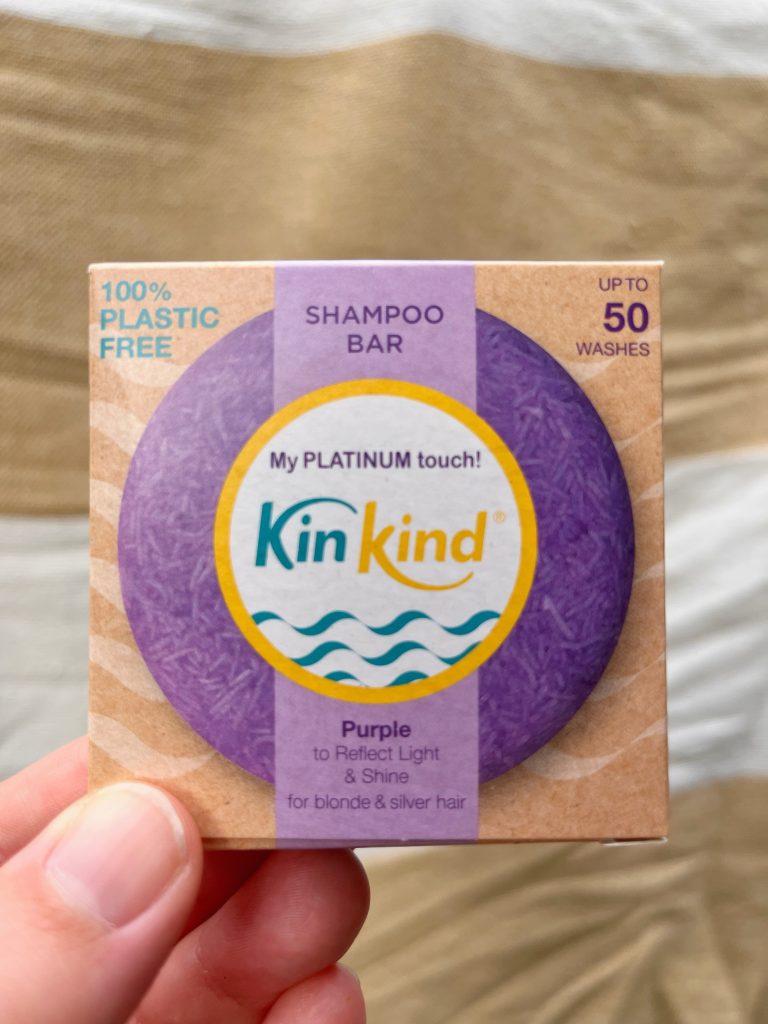
- KinKind shampoo bars
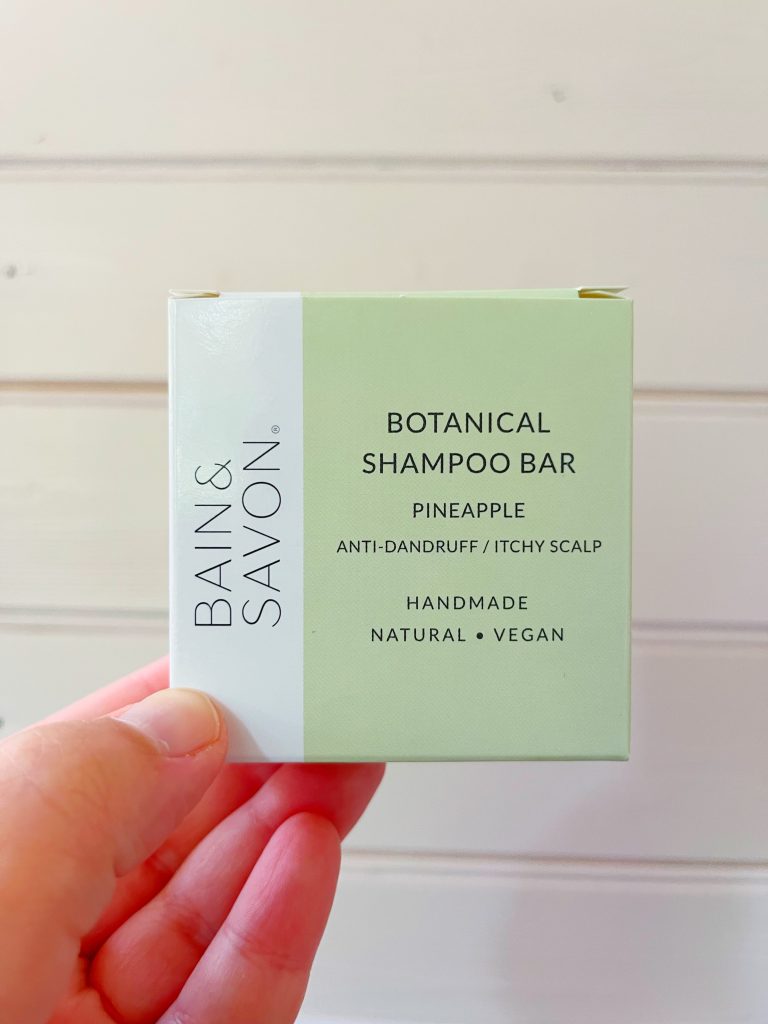
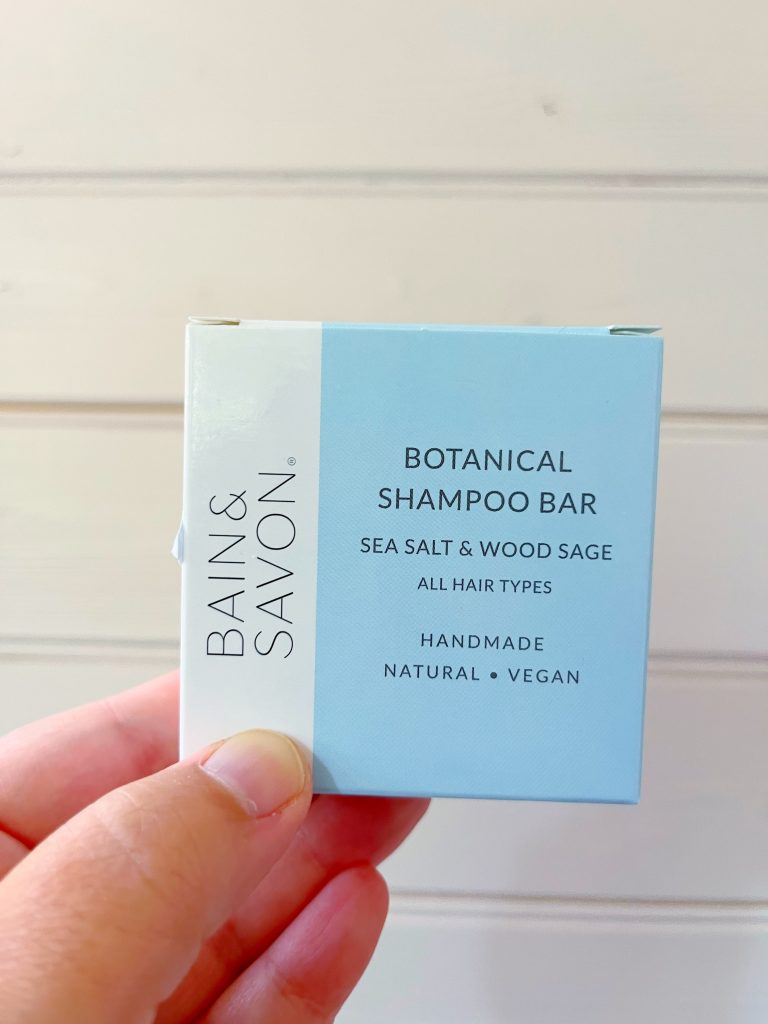
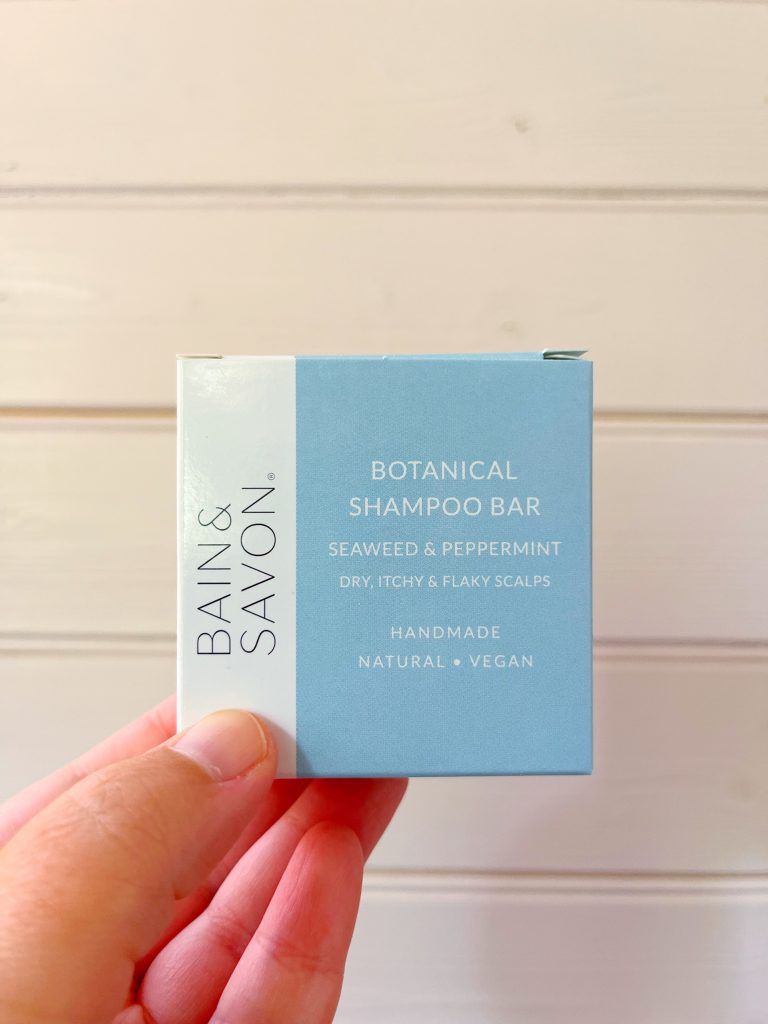
- Botanical shampoo bars by Bain & Savon
- The baobab or clarifying peppermint shampoo bars by Bean and Bee
- The fruit and flowers shampoo bar by Nirvana Natural
Shampoo bars that won’t give you that weird residue feeling
If you’ve tried a shampoo bar before but had that weird feeling after — like you haven’t even washed your hair — it’s the shampoo bar that’s the problem, not you!
You were probably using a ‘natural shampoo’ bar. These bars typically have similar ingredients and pH levels to those of a soap bar, and, in my experience, they don’t work well in hard water.
I tried for over a year to transition to using ‘natural shampoo’. It took so much water to wash it out of my hair, and I still felt like I had build-up afterwards. I tried vinegar rinses, bicarb rinses, and even using distilled water in the hope my hair would feel clean.
Ultimately, I decided that none of that felt very eco-friendly to me.
You don’t need a transition phase when switching to shampoo bars
Using a shampoo bar should give you the same results as washing with liquid shampoo. Your hair doesn’t need to go through a transition phase; you just need to choose the right shampoo bar that works in hard water.
Ingredients to look out for when choosing shampoo bars for hard water
Solid shampoos that use surfactants will contain one or more ingredients to boost the cleansing properties of the bar. This makes them very effective at cleaning your hair, no matter what water type you use them in, and will do a much more consistent job of removing any dirt, product or mineral deposits that you have in your hair.
Depending on the bar you choose, surfactant-based solid shampoos will likely be PH balanced so that there is no transition phase and no need to use a vinegar rinse alongside them too.
If you want to choose a shampoo bar with a surfactant in it, look out for these ingredients:
- sodium coco sulphate
- sodium cocoyl isethionate
- sodium cocoyl glutamate
- decyl glucoside
Bars that contain sodium lauryl sulfate (SLS) will also work well in hard water. However, many brands will use SLS alternatives due to the bad reputation that this particular ingredient has got in recent years (but that’s one for another post).
What to avoid when choosing a hard-water bar
Whilst there may be similarities in what goes into shampoo bars, natural shampoo commonly has oils and fats as its main ingredients. Look out for the following:
- Sodium Olivate (olive oil)
- Sodium Castorate (castor oil)
- Sodium Cocoate (coconut oil)
- Sodium Sunflowerate (sunflower oil)
- Sodium Shea Butterate (shea butter)
If the shampoo bar you’re considering has these ingredients and no sign of a surfactant, it’s probably a soap-based bar that won’t work well in hard water.
Tried and tested bars that work every time
Sage Folk is based in Norwich, Norfolk — an area of the UK with very hard water. I’ve personally tried out the different shampoo bars that I stock, and I only sell the ones that provide consistent results (and that I love using myself).